TABLE OF CONTENTS
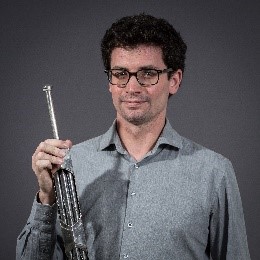
Antoine Gerschenfeld obtained his PhD from Ecole Normale Supérieure in 2012, and has been coordinating R&D on the thermal-hydraulics of Sodium Fast Reactors at CEA's Thermal-Hydraulics and Fluid Mechanics Section (STMF) since 2013. In that capacity, he has led the development of a subchannel thermal-hydraulics code (TrioMC) as well as the development of a tool for coupling coarse and fine models in a single reactor-scale simulation (MATHYS). He has also been involved in a number of collaborations at the bilateral, European and international levels.
Towards More Efficient Implementations of Multiscale Thermal-Hydraulics
Chief Scientist, Delta Energy Group Qingdao (DEQD), China DEQD Institute for Advanced Research in Multiphase Flow and Energy Transfer, Qingdao, China
With more than 30 years of experiences in both academia and industrial research, Dr. Yang is a recognized expert in the following areas: reactor thermal-hydraulics and nuclear safety, large-scale rod bundle CHF experiments and multiphase flow measurements, subchannel analysis, and CFD modeling. He began serving as Director at Columbia University’s Heat Transfer Research Facility (HTRF) from 1993 to 2003. From 2012 to 2018, Dr. Yang was appointed as the Chief Scientist of CGN (China General Nuclear Power Group). He was also a professor and Dean of the School of Nuclear Science and Technology at Xi’an Jiaotong University (XJTU) in China from 2012 to 2015. With more than 250 publications and 23 US and worldwide patents, Dr. Yang has served as the Chief Guest Editor for Journal of Nuclear Engineering and Design (NED), Nuclear Science and Engineering (NSE), Nuclear Technology (NT), Science and Technology of Nuclear Installations (STNI), and Kerntechnik. As the Chair of the Technical Program Committee (TPC), Dr. Yang has successfully organized the 1st and 2nd International Seminar on Subchannel Analysis-CHF and CFD (ISACC) in 2013 and 2015, respectively. In 2018 ISACC was expanded to include various topics on reactor core thermal-hydraulics. In addition, as the TPC Chair, Dr. Yang successfully organized the NURETH-17 (the 17th International Topical Meeting on Nuclear Reactor Thermal Hydraulics) in Xi’an, China, 2017 with over 800 papers and 1000 participants. Under his leadership, the DEQD Institute for Advanced Research in Multiphase Flow and Energy Transfer Qingdao, China was established in 2019 to promote the study of key physical phenomena in multiphase flow with special focus on safety and efficiency in various forms of energy transfers.
Multi-Level CFD Modeling and Applications for Subchannel Thermal-Hydraulics, Experimental Designs, and Safety Analysis
Francesco D’Auria received PHD degree in Nuclear Reactor Safety in 1980 both at Univ. of Pisa. He was awarded of a research grant from Univ. of Pisa in 1978; then he was winner of the Assistant Prof. position in 1981 at Univ. of Pisa (area of nuclear TH), of the Associate Prof. position at Univ. ‘La Sapienza’ in Rome in 1991 (area of radiation applications) and the Chair (Full) Prof. position at Univ. of Pisa in 2000 (area of nuclear thermal-hydraulics), the last one being the current position. He was engaged as ‘Adjoin Professor’ at Univ. of Genova in the period 1993-2003 (area of world energy status and planning). He is ANS member since 1981. Since 1980 he has been member in several international working groups at ANS, EC, IAEA and OECD/NEA including CSNI since 2015 and CSNI Senior Group of experts since 2017. He has been responsible for research projects valued more than 20 M Euro in the period 2000-2015. He was member and Chair of Technical Program in several International Conf.s and member of the scientific committee and Editorial Board for a dozen Journals. He is co-author of more than 1000 publications including around 200 journal papers and 100 reports published by International Institutions (IAEA and OECD/NEA). Recipient of various recognitions, e.g. best paper, excellent session organizer, most downloaded paper notification, Marquis Who’s Who VIP listee (selected for Albert Nelson Marquis Lifetime Achievement Award) etc. Key awards and achievements are:
- Foreign Member of Argentinean Academy of Science in Buenos Aires (Argentina).
- “N.A. Dollezhal Gold Medal” by NIKIET in Moscow (Russia)
- Founder & Editor in Chief during 5 years of the J. Science & Technology of Nuclear Installations (STNI).
- Member of Editorial Board of NED since 1990 and (Associate) Editor since 2019.
- Enhancing and promoting the best use of computational tools in nuclear reactor safety including proposal of methods for validation, uncertainty, scaling and design of experiments, reliability of passive systems. Integrating fundamental technology and understanding with application in nuclear reactor safety and licensing processes for NPP.
- General Chair of ANS NURETH-15 Conf., Pisa (Italy) 2013, ENS TopSafe Conf.s. Dubrovnik 2008, Helsinki 2012, and Vienna 2017, OECD/NEA/CSNI Spec. Meet., Madrid 2020.
- Editor and key Author of the Elsevier Book “Thermal Hydraulics of Water Cooled Nuclear Reactors”.
- NURETH Fellow in Xi’an (PRC), 2017.
- Coordinator-promoter-author of four State of Art Reports (SOAR) published by OECD/NEA: Two-Phase Critical Flow (TPCF) in 1980, TH of Emergency Core Cooling Systems (TECC) in 1987, Boiling Water Reactor Stability (BWRS) in 1996, Scaling (S-SOAR) in 2017 and Reliability of Passive Systems (2020).
- Member of NEA scientific groups since 1980 (PWG-2, W-GAMA, etc.); CSNI member since 2016; member of CSNI Senior Expert Group 2017-2020.
- Member of IAEA scientific and consultancy groups period 1983-2016.
- Life recognition for activities in BEPU area, (Lucca, BEPU2018).
Passive Systems and Nuclear Thermal-Hydraulics
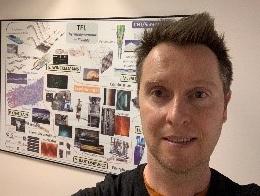
After graduating in Turbulence modeling in France (INPG, Grenoble), Prof. Y. Bartosiewicz obtained his PhD from Université de Sherbrooke (Canada) in 2003 on CFD simulation of supersonic plasma jets under non-equilibrium conditions. The same year he joined Natural Resources Canada (CANMET Lab) with a NSERC (Natural Sciences and Engineering Research Council of Canada) Postdoc fellowship where he started research activities on simulation of supersonic ejectors. In 2005 Prof. Bartosiewicz joined Université Catholique de Louvain (UCLouvain) in Belgium as professor. At UCLouvain, he has been further developing his research on ejectors both on simulation and experiments and he has been also starting a research on numerical simulation in nuclear thermal-hydraulics, through several EU projects, where his recent work contributed to better understand turbulent forced convection heat transfer in liquid metal conditions by doing LES and DNS of different configurations (channel, impinging jet, free shear layer and backward facing step). At UCLouvain he has been the head of the thermodynamic and fluid mechanic division between 2012-2016 and Chairman of the Belgian Nuclear Education Network between 2014-2016. He gave several invited lectures at von Karman Institute (VKI) concerning two-phase choked flows and simulations of low Prandtl heat transfer. His teaching duties concern thermodynamics, thermal-cycles and nuclear thermal-hydraulics.
High Fidelity Simulations in Support to Assess and Improve RANS for Modeling Turbulent Heat Transfer in Liquid Metals: The Case of Forced Convection